
Quick answer: How to style an ikat dress? Let the handwoven print lead — pair it with minimal, solid-colored accessories (flats and small hoops for day, heels and one statement piece for evening) rather than competing patterns. That’s really the whole trick to how to style an ikat dress for any occasion, from brunch to a festive evening out, and it’s a technique that works whether you own one ikat piece or five.
If you’ve just added an ikat dress to your wardrobe — or you’re eyeing one — you’re probably wondering how to style an ikat dress so it doesn’t just sit in the closet for “someday.” Good news: this handwoven print is one of the easiest patterns to build a whole rotation of outfits around, and once you understand a few basic rules, you’ll find yourself reaching for it more than almost anything else you own.
Below are seven ways to wear one, a full guide to the craft behind it, and answers to the questions people ask most, using our own Lavender Ikat Dress as the working example throughout.
Table of Contents
Key Takeaways
- The simplest answer to how to style an ikat dress is to keep jewelry and shoes solid-colored so the print stays the focus.
- Genuine ikat is woven, not printed — the yarns are tie-dyed before weaving, giving it a soft, slightly blurred pattern edge.
- One ikat dress can cover casual, festive, work, and evening occasions just by changing shoes and accessories.
- Cotton and cotton-linen ikat dresses are ideal for summer — breathable, lightweight, and low-maintenance.
- Hand wash in cold water and dry in the shade to protect the natural dye colors.
- Ikat is different from tie-dye and block print — the pattern is built into the yarn itself before the fabric is even woven.
What Is Ikat Print, and Why Does It Matter?
Before the styling tips, a quick word on what makes ikat different from a regular printed dress. Ikat isn’t printed on top of the fabric at all — the yarns are tie-dyed before weaving, so the pattern is built into the threads themselves. That’s why genuine ikat has that soft, slightly blurred edge to its motifs, and why no two panels ever line up exactly the same way — which is also part of how to style an ikat dress well: work with the irregularity instead of against it.
The process itself is painstaking. Weavers measure, bind, and dye sections of yarn — sometimes dozens of times in different colors — before a single thread ever touches a loom. Only once the dyeing is complete does the actual weaving begin, and the weaver has to align the pre-dyed yarns precisely enough that the intended pattern emerges as the cloth comes together. A single misalignment and the motif blurs more than intended, which is exactly why hand-loomed ikat has that faint, breathing-room softness that machine prints can’t fake.
A Brief History of Ikat Weaving in India
Ikat weaving traditions run deep across several regions of India, each with its own signature style. Odisha is known for Sambalpuri ikat, often featuring traditional motifs like shankha (conch), chakra (wheel), and phula (flower) woven directly into the cloth.
Telangana and Andhra Pradesh are home to Pochampally ikat, recognizable by its geometric, almost pixelated patterns — a style so distinctive it’s earned its own Geographical Indication tag. Gujarat produces Patola, considered the most technically demanding form: double ikat, where both the warp and weft yarns are tie-dyed separately and then woven together so precisely that the pattern appears on both sides of the fabric identically. Knowing this history is part of learning how to style an ikat dress with real appreciation for what it is.
What we’re borrowing from for a piece like the Lavender Ikat Dress is this same centuries-old resist-dye logic, just adapted into a modern silhouette. It’s worth knowing this history because it changes how you see the dress — you’re not just wearing a pattern, you’re wearing a specific, still-practiced weaving technique that takes real skill to execute.
Ikat vs. Block Print vs. Bandhani: What’s the Difference?
It’s easy to lump all Indian textile techniques together, but they’re genuinely different processes. Block printing stamps a carved wooden block dipped in dye directly onto finished, already-woven fabric — the pattern sits on top of the cloth.
Bandhani (tie-dye) involves tying tiny sections of the finished fabric and dyeing it, creating small dot-like patterns from resist. Ikat is the odd one out: the resist-dyeing happens on the yarn itself, before weaving even starts, which is why it alone produces that soft-focus, slightly imprecise pattern edge. None of these techniques are “better” than the others — they’re just different crafts, and knowing the difference helps you understand exactly what you’re buying and why it’s priced the way it is.
How to Style an Ikat Dress: 7 Easy Ways to Wear It
Here’s exactly how to style an ikat dress for seven different occasions, using one dress as your whole starting point.
1. Casual Daytime: Flats and Minimal Jewelry
The easiest way — really how to style an ikat dress for daytime — is also the most underrated: flat sandals, small hoops, and nothing else fighting for attention. This is exactly how we’d wear the Lavender Ikat Dress for a market run or a lunch with friends — its adjustable spaghetti straps and side pockets make it genuinely wearable, not just photogenic. Skip the layered necklaces here; one clean silhouette does more work than five small accessories competing with the print.
2. Festive Occasions: Statement Jewelry
Here’s how to style an ikat dress for something festive: ikat dresses hold their own at festive gatherings when you add layered gold jewelry, a bold cuff, or jhumkas. Because the print already carries visual weight, you don’t need much — one strong piece is usually enough. A bindi and a swipe of kajal can round out the look without turning it into a full ethnic outfit if that’s not what you’re going for.
3. Work-Appropriate: A Structured Layer
One clear answer to how to style an ikat dress for the office is to add a fitted blazer or a structured cardigan over it. Keep shoes simple — a block heel or loafer — and the whole look reads polished rather than “vacation.” A structured tote instead of a slouchy bag finishes the transition from weekend to weekday.
4. Evening Out: Heels and a Statement Earring
If you’re wondering how to style an ikat dress for evening, swap flats for heels, add a single statement earring, and the same dress you wore casually in the afternoon works for dinner that night. This is the real value of a good ikat dress — it doesn’t need a separate “going out” wardrobe. A darker lip color and your hair down instead of up is often the only other change needed.
5. Vacation and Resort: Sandals and a Tote
Cotton-linen ikat dresses were basically made for warm-weather travel. Breathable fabric, a relaxed A-line cut, and a print that hides travel-day wrinkles better than a solid color ever could — genuinely one of the easiest ways to answer how to style an ikat dress for a trip. Pack it once and it covers a beach lunch, a sightseeing day, and a casual dinner without needing three separate outfits.
6. Layered Look: A Denim Jacket On Top
Another way to answer how to style an ikat dress in cooler weather: for cooler evenings or transitional weather, throw a denim jacket over an ikat dress. The contrast between the woven print and casual denim keeps the outfit from feeling too “dressed up,” and it’s an easy way to wear a summer dress into early autumn without buying anything new.
7. Let the Print Lead: Monochrome Accessories
A last trick for how to style an ikat dress: when in doubt, pick one color already in the ikat pattern — like the lavender in ours — and match your bag or sandals to it. It’s a simple trick that makes an outfit look intentional instead of thrown together, and it’s the single fastest styling decision you can make when you’re in a hurry.
Common Mistakes to Avoid When Wearing an Ikat Dress
Knowing how to style an ikat dress also means knowing what not to do. A few things worth avoiding: pairing ikat with another bold print (florals, stripes, animal print) usually reads as visually busy rather than intentional — save the pattern-mixing for a different outfit.
Over-accessorizing is the second most common mistake; because the print already does visual work, five accessories competing for attention will make the whole look feel cluttered instead of put-together. And finally, treating an ikat dress like a strictly “ethnic-occasion-only” piece undersells it — as the styling ideas above show, it moves through casual, work, and evening settings just as easily.
How to Care for and Store Your Ikat Dress
Because ikat’s colors come from a dye process rather than a printed surface coating, a little extra care keeps the pattern looking sharp for years. Hand wash in cold water rather than machine washing, and skip the bleach entirely — it will dull the natural dye tones fast.
Turn the dress inside out before ironing, and keep the iron on a moderate heat rather than the highest setting, since the dyed yarns can be more sensitive to direct heat than a plain-dyed cotton. Dry in the shade, not direct sun, which will help the color stay true instead of fading unevenly.
For storage, a breathable cotton garment bag works better than a sealed plastic one, and keeping it folded rather than on a hanger for long stretches avoids stress on the fabric at the shoulder seams. This is really the other half of how to style an ikat dress well over time.
How to Choose the Right Ikat Dress: A Quick Buying Guide
Part of learning how to style an ikat dress is choosing the right one to begin with.
If you are shopping for your first one, a few things are worth checking before you buy.
First, look closely at the pattern edges — genuine handwoven ikat has that characteristic soft blur where the tie-dyed yarns meet during weaving, while a machine-printed imitation will have crisp, sharp pattern edges with no irregularity at all.
Second, check the fabric weight against your climate: a lightweight cotton or cotton-linen blend suits hot, humid weather, while a heavier cotton or a cotton-silk blend works better for cooler evenings or air-conditioned offices. Third, consider the silhouette relative to how you actually want to style an ikat dress day to day — an A-line cut like the Lavender Ikat Dress is the most versatile starting point precisely because it moves easily between the seven looks above, whereas a more fitted or heavily embellished ikat piece narrows down your options to fewer occasions.
Finally, check for details that add real everyday value: side pockets, adjustable straps, and a comfortable, breathable lining make the difference between a dress you wear constantly and one that only comes out for photos.
Why We Love the Lavender Ikat Dress
If you take away one thing from this guide on how to style an ikat dress, let it be this example. Our own Lavender Ikat Dress is the dress we used to show you how to style an ikat dress in real life, not just in theory.
It’s a breathable cotton-linen A-line dress with adjustable spaghetti straps — secured with a hook so you can customize the fit — and roomy pockets on both sides. The ikat print is genuinely handwoven, not printed, which is why every dress has its own slightly unique pattern placement, in keeping with the centuries-old technique described above.
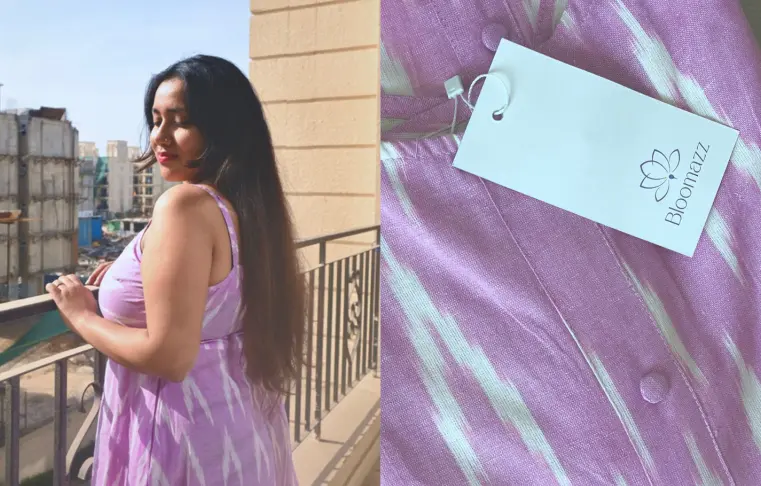
It’s an easy dress to build a whole week of outfits around, and a good one if you’re figuring out how to style an ikat dress for the first time — the silhouette is forgiving and the print does most of the styling work for you.
Frequently Asked Questions About Ikat Dresses
What is ikat print?
Ikat is a weaving technique where the yarns are tie-dyed before the fabric is woven, rather than printing a pattern onto finished cloth. This gives ikat its signature soft, slightly blurred pattern edges.
What’s the easiest way to style an ikat dress?
Keep your accessories minimal and solid-colored, and let the woven print lead. That’s the fastest way to style an ikat dress for almost any occasion — flats and small hoops for day, heels and one statement piece for evening.
Is an ikat dress good for summer?
Yes — especially when it’s made from cotton or a cotton-linen blend, which is breathable and lightweight enough for hot, humid weather.
How do I wash a cotton ikat dress?
Hand wash in cold water, avoid bleach, and dry in the shade rather than direct sunlight to protect the natural dye colors. Always check the specific care label on your dress first.
Can I wear an ikat dress to work?
Yes — pair it with a structured blazer or cardigan and simple block heels or loafers for a smart-casual office-appropriate look.
What shoes go best with an ikat dress?
Flat sandals for daytime, block heels for work, and strappy heels for evening — the print is versatile enough to work with almost any shoe style.
Is ikat the same as tie-dye?
They’re related but not the same. Tie-dye is done on finished fabric after weaving. Ikat ties and dyes the individual yarns before they’re ever woven, which is what gives it that structured-yet-blurred pattern instead of tie-dye’s looser swirls.
How long does it take to weave an ikat fabric?
Genuine handwoven ikat can take anywhere from a few days to several weeks per piece, depending on the complexity of the pattern and whether it’s single ikat (one set of yarns tie-dyed) or double ikat (both warp and weft tie-dyed, which is far more time-intensive and precise).